

The word “culture’ defines itself as something to grow. Anything that is grown needs care, passes through a complete development cycle till it can withstand challenges. A healthy seed sown for cultivating a fruitful plant needs nourishment till it germinates, followed by stem, foliage, budding, flowering, fruiting, and ripening.
In the same way, if the culture at shop floor is to be defined precisely, it can be anticipated as nurturing the team with care, positivity and social acquaintance by inputs of dynamic leadership through transparent mapping.
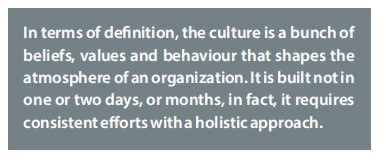
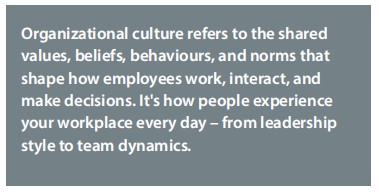
 In terms of definition, the culture is a bunch of beliefs, values and behaviour that shapes the atmosphere of an organization. It is built not in one or two days, or months, in fact, it requires consistent efforts with a holistic approach. Also, requires a firm framework with planned actions which shall be implemented periodically with consistent monitoring to get transparent results.
 Let us go to ancient times, in the 15th century, when the term “culture” originated from the Latin word colere, meaning ‘to till the soil’ or ‘to cultivate’. Also, the ancient Roman orator Cicero first used the term with a similar meaning, which clearly indicates the wide use of this term in cultivation.
As time passed, by the 18th century, “culture” broadened to include the “intellectual and moral cultivation of the individual,” as well as the refinement of the mind, taste, and intellect. The definition also varied in terms of region; in Europe, it was taken specifically as developing ideals and individualism, whereas in India, it was focused on adherence to religious traditions and the adoption of social customs.
In the meantime, language and culture both emerged as a means of using symbols to construct social identity and maintain coherence within a social group.
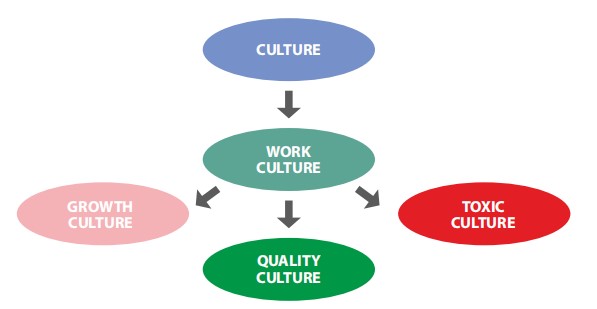
Over a period, the term culture became advanced, adopted widely by a group of people called ‘Team’ and group of multiple teams from different sections called ‘organization’. Whether a group of positive or negative people superseded, the work culture transferred into different forms. Positivity cultivated growth and quality and, at the same time, negativity darkened this term culture into ‘Toxicity’, where people just survived and tend to search for a caring and growing environment.

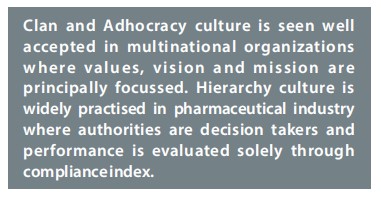
 Most organizations fall broadly into four culture categories, and each culture is defined in its own way, comprising both advantages and limitations.
 Clan Culture: Collaborative and people-focused
– building trust and loyalty
- Open communication across all levels.
- Cross-functional collaboration between teams.
- Collective celebrations of success.
- Leaders who emphasize coaching and development.
 Adhocracy culture: Innovative and risk-taking – emphasising agility and seizing new opportunities
- Thrives on change and experimentation.
- Rewards creativity and encourages people to challenge the status quo.
- Accepting failure as a part of the learning process.
- More freedom to make decisions and pursue new projects.
 Market culture: Results-driven and competitive – strong accountability, decision-making and recognition
- Performance is everything
- Measuring success through clear outcomes (revenues, profitability, or market share)
- Leaders push teams to deliver measurable results.
- Competition is encouraged, both internally and externally
 Hierarchy culture: structured and process-oriented – order, compliance, policies, layered, disciplined
- Heavy reliance on policies and reporting systems.
- Top-down decision-making where authority is clearly defined.
- Promotions and recognition tied to compliance with procedures.
- Clarity, reduces uncertainty, and manages complexity at scale.
 Let us switch to the pharmaceutical industry, where everyone talks about Quality Culture. It can be defined as the collective behaviour of a group of people whose common goal and subsequent mindset development are centred on “quality.”
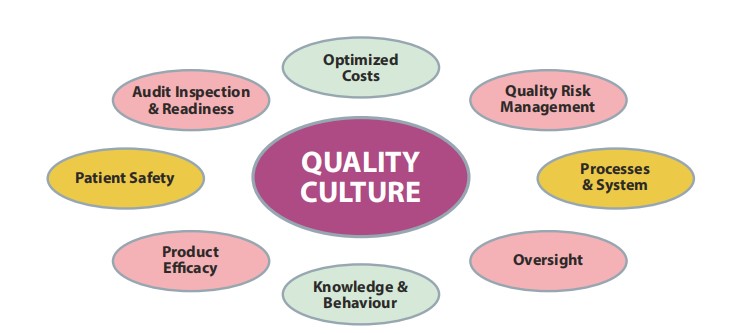
Following elements play a vital role in developing quality attributes in any organization:
 Leadership and communication
Transparency: Leaders should be open about company goals and performance to build trust.
Clear communication: Establish clear lines of communication for feedback, problem-solving, and sharing information, often visualized with tools like whiteboards.
No- Blame Culture: Shift focus from “who made the mistake” to “how to fix the process”.
Effective leadership: Managers must consistently embody company values, support employees, and provide clear direction.
 Employee empowerment and development
Empowerment: Encourage teams to own problem-solving and have the authority to make decisions related to their work.
Growth opportunities: Invest in employee training and provide opportunities for career development and learning.
Accountability: Foster an environment where employees are accountable for their actions and can learn from both successes and mistakes.
Rewards & Recognition: Incentivize the employees as champions who contribute to improve operational and quality aspects.
Celebrate Milestones: Keep shortcomings aside and celebrate success moments with down the level.
Toxic work culture
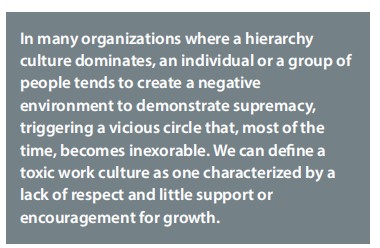
In many organizations where a hierarchy culture dominates, an individual or a group of people tends to create a negative environment to demonstrate supremacy, triggering a vicious circle that, most of the time, becomes inexorable. We can define a toxic work culture as one characterized by a lack of respect and little support or encouragement for growth. Such an environment can lead to high employee turnover, low morale, and decreased productivity. The outcome is an increased turnover intention, which tends to rise if the same culture persists for a long time.
 When individuals in power become greedy and narcissistic, they may start unethical action such as bully, harass, threat, and humiliate others that cause anxiety,
 stress, depression, health problems, absenteeism and job burnout, resulted low productivity and increase turnover intention (Anjum et al , 2018).
According to Belete (2018), the prerequisite of leaving the job or organization is the intention to leave and can be referred as turnover intention. This happened everywhere regardless of location, size or nature of business. Turnover intention is a serious issue of most organizations in private sector compared to public sector (Alias et al, 2018).
 Remedies
Walk the talk: Ensure management set a good example of appropriate workplace behaviours by treating employees respectfully and always encouraging respectful interaction.
Have an open-door policy: Employer or HR Department must be approachable, trustworthy, and let employees know that you are there to help them.
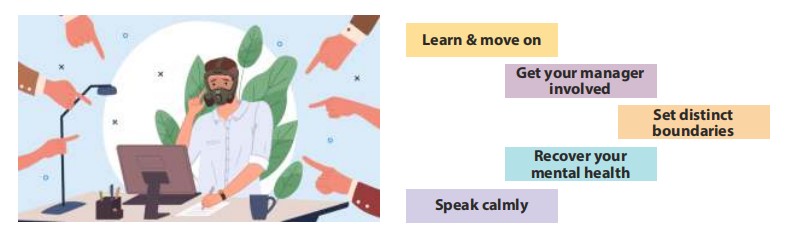
 Verbal abuse
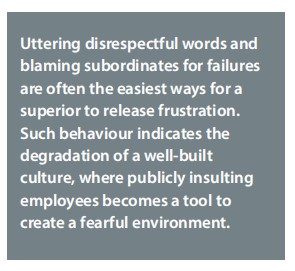
Uttering disrespectful words and blaming subordinates for failures are often the easiest ways for a superior to release frustration. Such behaviour indicates the degradation of a well-built culture, where publicly insulting employees becomes a tool to create a fearful environment. Instead, the superior may be compensating for his own fear of management queries, which, in the long term, can lead to fatal results.
The sufferer needs to speak up and intimate the abuser to stop using inappropriate words and unacceptable behaviour which might not be tolerable for him next time. Try to maintain distance with such person, if possible.

Navdeep Singh Kathuria is Senior General Manager – Production (Packing) at Aurobindo Pharma Ltd. He is working on implementing lean methodology along with automation of process equipment. Started his career with tablet manufacturing, his additional area of expertise is Track & Trace systems and simplification of documentation on shop floor by means of replacing manual recording into the electronic form (EBMR).